VHF Marine Radio Short Range Course by Elite Offshore

Published - Mon, 03 Jun 2024

 VHF Marine Radio Short Range Course by Elite Offshore

In the dynamic and demanding environments of the offshore and marine industries, effective communication is crucial for ensuring safety and operational efficiency. The VHF Marine Radio Short Range Course offered by Elite Offshore Pvt Ltd is specifically designed for individuals working in these industries who do not need to comply with the GMDSS requirements but still require robust communication skills. This comprehensive training program adheres to the International Maritime Organization (IMO) guidelines, ensuring participants gain essential knowledge and practical skills for utilizing VHF marine radios effectively.

 Course Overview

The VHF Marine Radio Short Range Course is a thorough program that covers the fundamental principles, operational procedures, and regulatory aspects of VHF marine radio communications. The course is structured to provide a blend of theoretical knowledge and practical hands-on experience, ensuring that participants are well-prepared to handle real-world communication scenarios.

General Principles and Basic Features:

- Maritime Mobile Service:
  - Overview: Introduction to the maritime mobile service, including its relevance to vessels not subject to compulsory fit under the SOLAS convention.
  - Types of Communication: Detailed exploration of the different types of communication within the maritime mobile service.
  - Types of Stations: Understanding the various types of stations involved in the maritime mobile service.
  - Radio Frequencies and Channels: Elementary knowledge of radio frequencies and channels appropriate to the VHF maritime mobile band.
  - Functionality of Ship Station Equipment: Overview of the basic features and functionalities of ship station equipment.

Types of Communication in Maritime Mobile Service:

- Voice Communication: Utilizing VHF radios for voice communication, including protocols and etiquette.
- Digital Communication: Introduction to digital communication methods used in the maritime mobile service.

Radiotelephone Channels:

- Overview and Usage: Detailed information on radiotelephone channels, including their specific purposes and how to use them effectively.
- Channel Allocation: Understanding the allocation of channels for different communication needs.

Basic Controls and Usage:

- Hands-on Training: Practical exercises focusing on the basic controls and proper usage of VHF radiotelephone equipment.
- Troubleshooting: Basic troubleshooting techniques for common issues with VHF radios.

Portable Two-Way VHF Radiotelephone Apparatus:

- Operation and Maintenance: Detailed instruction on operating and maintaining portable two-way VHF radiotelephone apparatus.
- Practical Exercises: Hands-on practice with portable VHF radios to ensure proficiency.

Maritime VHF Antennas:

- Types and Installation: Overview of different types of maritime VHF antennas and their installation procedures.
- Maintenance: Best practices for maintaining VHF antennas to ensure optimal performance.

Purpose and Use of DSC Facilities:

- Introduction to DSC: Understanding the purpose and functionality of Digital Selective Calling (DSC) facilities.
- Types of Calls: Different types of DSC calls, including routine, safety, and distress calls.
- MMSI System: Detailed explanation of the Maritime Mobile Service Identity (MMSI) number system and its importance.
- Call Categorization and Priority: Understanding the categorization and priority of calls, such as Mayday, Pan-Pan, and Securite.
- Call Telecommand and Traffic Information: Procedures for call telecommand and managing traffic information.
- VHF DSC Facilities and Usage: Hands-on training on using VHF DSC facilities.

Protection of Distress Frequencies:

- Regulations and Best Practices: Guidelines for protecting distress frequencies to ensure they are available for emergency use.
- Practical Exercises: Simulated scenarios to practice maintaining clear distress frequencies.

Maritime Safety Information:

- Receiving and Interpreting: How to receive and interpret maritime safety information via VHF radio.
- Alerting and Locating Signals: Overview of alerting and locating signals, including their practical applications.

Emergency Position Indicating Radio Beacons (EPIRBs):

- Function and Usage: Understanding the function and proper usage of EPIRBs in emergency situations.
- Testing and Maintenance: Procedures for testing and maintaining EPIRBs to ensure readiness.

Search and Rescue Radar Transponder (SART):

- Purpose and Operation: Detailed instruction on the purpose and operation of SART devices.
- Practical Training: Hands-on exercises using SART to simulate real-life search and rescue scenarios.

Exchanging Safety Communications:

- Safety of Life at Sea: Ability to exchange communications relevant to the safety of life at sea.
- Distress Communications: Understanding and practicing distress communication protocols.
- Urgency and Safety Communications: Procedures for handling urgency and safety communications effectively.

Reception of Maritime Safety Information:

- Using VHF Radiotelephone: How to receive and process maritime safety information via VHF radiotelephone.

IMO Standard Marine Navigational Vocabulary:

- Communication Clarity: Awareness of the existence and use of the IMO Standard Marine Navigational Vocabulary to ensure clear communication.
- International Phonetic Alphabet: Use of the international phonetic alphabet for accurate and clear communication.

Regulations and Obligatory Procedures:

- Compliance: Ensuring compliance with regulations, obligatory procedures, and best practices.
- Radiotelephone Call Procedures: Practical and theoretical knowledge of radiotelephone call procedures.
- Traffic Charges: Understanding traffic charges associated with VHF communication.
- Practical Traffic Routines: Hands-on practice with practical traffic routines to build confidence and proficiency.


Participants in the VHF Marine Radio Short Range Course will gain:

- Enhanced Communication Skills: Improved ability to handle VHF marine radio communications efficiently and effectively.
- Safety and Compliance: Knowledge and skills to ensure compliance with IMO guidelines and enhance safety at sea.
- Practical Experience: Hands-on experience with VHF radio equipment, ensuring readiness for real-world scenarios.
- Confidence in Emergency Situations: Preparedness to manage distress, urgency, and safety communications confidently.


The VHF Marine Radio Short Range Course by Elite Offshore is an essential training program for maritime professionals in the offshore and onshore oil and gas industries, as well as the broader marine industry. By covering a comprehensive range of topics, from basic principles to advanced operational procedures, the course ensures that participants are well-equipped to handle all aspects of VHF marine radio communication. This training not only enhances individual skills but also contributes to the overall safety and efficiency of maritime operations.

For any further information, please contact training@eliteoffshore.in or call +91-22-4970 4933 or +91-80 9747 2277. You may visit our website https://eliteoffshore.in (for all courses) or https://ecademy.eliteoffshore.in (for e-learning courses).

Visit the training centre at below address:
Elite Offshore Pvt. Ltd.
G- 5, Platform Level, Tower-3, Belapur Railway Station Complex, Sector-11, C.B.D. Belapur, Navi Mumbai-400614.
Contact No. +91-80-9747-2277, +91-22-4970-4933, +91-22-4600-3839

Email: info@eliteoffshore.in or training@eliteoffshore.in 

Created by

ProSafe Learning

Elite Offshore Pvt Ltd, established 2015, headquartered in CBD Belapur, Navi Mumbai, is a renowned training institution specializing in safety and skill courses for the offshore and industrial sectors. With a commitment to excellence, Elite Offshore offers a wide range of courses designed to meet the specific needs of professionals working in challenging environments. These courses include BOSIET, HUET, HLO, HDA, OERTM, OERTL, and more, ensuring that individuals are equipped with the necessary knowledge and skills to excel in their roles. As a trusted name in the industry, Elite Offshore is known for its state-of-the-art facilities, experienced trainers, and adherence to international safety standards. Through their training programs, they aim to enhance safety, efficiency, and proficiency in offshore and industrial operations, contributing to the success and well-being of professionals and organizations alike. Learn more about Elite Offshore Pvt Ltd and their comprehensive training solutions at https://eliteoffshore.in. Elite Offshore Pvt Ltd was founded with a clear goal - to enhance safety standards and promote unmatched skills development in the offshore industry. Established in 2015, the institute quickly gained a reputation as a reliable partner for individuals and organizations seeking exceptional training programs. With a commitment to delivering top-quality training solutions, Elite Offshore has become a recognized name in providing complete safety and skill development programs for the industrial and offshore oil and gas sector. It's not just a training center but a hub of knowledge, safety, and professional growth.

ProSafe Learning: Advancing Safety and Professional Training

Founded with a vision to enhance safety awareness and professional skills in offshore, marine, and industrial sectors, ProSafe Learning has emerged as a trusted platform for safety training and certification. Based in Navi Mumbai, ProSafe Learning focuses on delivering high-quality training programs designed to prepare professionals for challenging and high-risk work environments.

Vision and Foundation

ProSafe Learning was created with the goal of promoting a strong culture of safety and skill development across the offshore and industrial industries. The platform was developed to provide professionals with access to reliable training resources that combine theoretical knowledge with practical insights.

From the beginning, ProSafe Learning has emphasized modern learning approaches, industry-relevant course content, and a commitment to international safety standards. The objective is not only to educate but also to empower professionals with the confidence and competence required to perform their roles safely and efficiently.

Courses and Training Programs

ProSafe Learning offers a wide range of training courses designed to meet the evolving needs of offshore and industrial professionals. These programs help participants build the knowledge and practical understanding required to operate safely in demanding environments.

These courses are structured to ensure professionals gain both the technical knowledge and safety awareness needed to perform their duties confidently.

Commitment to Quality Training

What distinguishes ProSafe Learning is its strong commitment to delivering high-quality and industry-relevant training. The platform focuses on modern training methods, practical learning experiences, and expert guidance from professionals with real-world industry experience.

By combining structured learning modules with practical insights, ProSafe Learning ensures that participants develop the skills required to handle real-life workplace challenges effectively.

Industry Focus

ProSafe Learning serves professionals and organizations across multiple sectors, including:

  • Offshore Oil & Gas

  • Marine Operations

  • Industrial Safety

  • Energy and Engineering Industries

Through continuous improvement and updated training content, the platform supports professionals in maintaining high safety standards and operational excellence.

Future Vision

Looking ahead, ProSafe Learning aims to continue expanding its training solutions and contribute to the development of a safer and more skilled workforce. Future goals include introducing new industry-focused courses, enhancing digital learning platforms, and strengthening partnerships with organizations across the safety and training ecosystem.

Conclusion

In industries where safety and preparedness are critical, ProSafe Learning plays an important role in equipping professionals with the knowledge and skills required for success. By promoting safety awareness, professional development, and industry best practices, ProSafe Learning continues to support individuals and organizations in building safer workplaces and stronger careers.


View profile

Comments (0)

Popular categories
Latest blogs
IADC RigPass vs BOSIET – what’s the difference?
For anyone planning a career in the offshore oil and gas industry, choosing the right safety training course is a critical first step. Two of the most commonly required offshore safety certifications are IADC RigPass and BOSIET. Many candidates are often confused about which course they need, as both focus on safety but serve very different purposes.Understanding the difference between IADC RigPass and BOSIET is essential before enrolling. Selecting the wrong course can lead to wasted time, additional training costs, or even rejection by employers. In this blog, we explain IADC RigPass vs BOSIET, covering course purpose, eligibility, validity, job roles, and which offshore safety course is right for you.What is IADC RigPass?IADC RigPass is an internationally recognised safety training programme developed by the International Association of Drilling Contractors (IADC). It is designed primarily for personnel working in drilling operations, both onshore and offshore.The IADC RigPass course focuses on basic rig safety awareness and safe working practices.                                               Key topics include:Hazard identification and risk assessmentUse of personal protective equipment (PPE)Fire safety and emergency responseStop Work AuthoritySafe behaviour on drilling rigsIADC RigPass certification is commonly required for:Drilling crewRig workersMaintenance personnelContractors entering drilling sitesThis course ensures that workers understand minimum safety expectations before entering a rig environment.Candidates working in drilling operations are usually required to complete IADC RigPass training before joining a rig.For a detailed overview of eligibility, validity, and course content, read our Complete Guide to IADC RigPass.What is BOSIET?BOSIET (Basic Offshore Safety Induction and Emergency Training) is an offshore safety course governed by OPITO. It is mainly required for personnel travelling to offshore installations by helicopter.BOSIET training focuses on offshore emergency preparedness and survival. The course typically includes:Offshore safety inductionHelicopter Underwater Escape Training (HUET)Sea survival techniquesFire fightingBasic first aidBOSIET is mandatory for most personnel working on offshore platforms, FPSOs, and offshore vessels where helicopter travel is involved.Difference Between IADC RigPass and BOSIETAlthough both are offshore safety courses, their objectives and applications are different.Aspect     IADC RigPass     BOSIETGoverning body     IADC     OPITOMain focus     Rig and workplace safety     Offshore emergency & survivalWork environment     Onshore & offshore drilling     Offshore installationsHelicopter training     Not included     Included (HUET)Typical job roles    Rig crew, drilling contractors     Offshore installation personnelValidity    As per IADC guidelines     4 yearsThis comparison clearly shows that IADC RigPass and BOSIET are not interchangeable.IADC RigPass or BOSIET – Which Course Do You Need?The choice between IADC RigPass or BOSIET depends on your job role and work location.Choose IADC RigPass if:You are joining a drilling rigYou are working in drilling-related operationsYour employer requires basic rig safety trainingYou are a fresher entering the drilling industryChoose BOSIET if:You will travel offshore by helicopterYou are working on offshore platforms or FPSOsYour employer specifically asks for BOSIET certificationIn some cases, workers may be required to complete both IADC RigPass and BOSIET, depending on project requirements.Is IADC RigPass Mandatory for Offshore Jobs?A common question is whether IADC RigPass is mandatory for offshore jobs. The answer is no, not for all roles.IADC RigPass is mainly required for:Drilling and rig-related positionsFor offshore production, maintenance, or marine roles, BOSIET is usually mandatory instead. Always confirm training requirements with your employer or recruitment agency.IADC RigPass vs BOSIET for FreshersFor freshers entering the oil and gas industry, choosing the right offshore safety course is crucial.Freshers aiming for drilling jobs should start with IADC RigPassFreshers targeting offshore platform roles should opt for BOSIETThere is no “better” course — only the right course based on your career path.Final ThoughtsBoth IADC RigPass and BOSIET are essential offshore safety training programmes, but they serve different purposes. While IADC RigPass focuses on rig-specific safety awareness, BOSIET prepares personnel for offshore emergencies and survival scenarios.Before enrolling, always consider:Your job roleWork environmentEmployer or client requirementsChoosing the correct offshore safety course will save time, money, and help you start your offshore career smoothly.Need Help Choosing Between IADC RigPass and BOSIET?If you are unsure whether IADC RigPass or BOSIET is required for your role, our team can guide you based on industry and employer requirements.???? Enrol in IADC RigPass training at eliteoffshore.inContact Elite Offshore Pvt Ltd to enrol in the right offshore safety training and improve your job readiness.

Wed, 04 Feb 2026

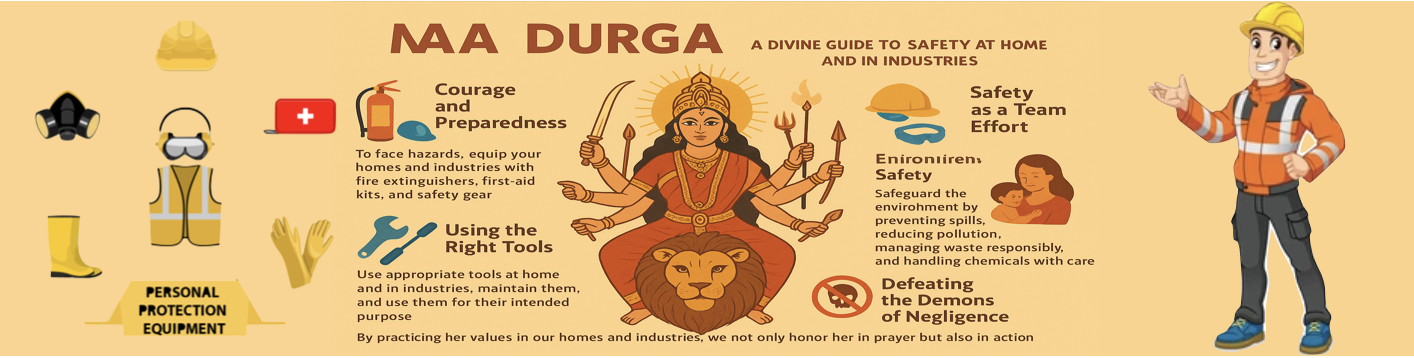
Maa Durga – A Divine Guide to Safety at Home and in Industries
Maa Durga – A Divine Guide to Safety at Home and in IndustriesMaa Durga, the goddess of power, courage, and protection, is worshipped across India as a symbol of victory over evil. Her ten arms, each holding a purposeful weapon, symbolize readiness, discipline, and the ability to protect those in her care. While her stories are deeply spiritual, her qualities are timeless lessons that can be applied to ensure safety both at home and in workplaces — especially in industries where lives depend on vigilance.Courage and PreparednessOne of Maa Durga’s greatest teachings is courage in the face of danger. In safety, this means not ignoring hazards but acting upon them. At home, it might be reporting a gas leak immediately; in industries, it means raising concerns about unsafe machinery or processes without fear. Just as Maa Durga’s weapons are always ready, safety equipment like fire extinguishers, first-aid kits, helmets, and harnesses should always be maintained and within reach.Discipline and VigilanceMaa Durga’s battles were won not only with strength but also through discipline and alertness. In safety, discipline means strictly following rules and procedures — wearing PPE, maintaining lockout-tagout systems, keeping escape routes clear, and attending safety training. Vigilance is about spotting small warning signs: a strange smell from the kitchen, a loose electrical wire, or an unusual sound from a machine. Many accidents happen because people get careless, but Maa Durga teaches us to stay watchful at all times.Using the Right ToolsEvery weapon in Maa Durga’s hands had a purpose, and she knew when and how to use it. In safety, choosing the right tool for the job is just as important. At home, this means using a stable ladder instead of a chair. In industries, it means wearing the correct gloves, helmets, and harnesses, and ensuring that tools and machinery are well maintained.Protection for AllMaa Durga fights not for herself but for the well-being of all. Safety too is not just about self-protection — it is about protecting others. At home, this includes keeping hazardous substances away from children or helping elders avoid tripping hazards. In the workplace, it means looking out for co-workers, ensuring they follow safety measures, and lending a hand during emergencies.Environmental SafetyOne form of Maa Durga, Maa Shailputri, represents harmony with nature. True safety is not limited to people — it also includes safeguarding the environment. This means preventing oil spills, reducing pollution, managing industrial waste responsibly, and handling chemicals with care.Defeating the Demons of NegligenceThe demons Maa Durga fought can be compared to modern-day threats like negligence, ignorance, and overconfidence. Just as she never underestimated Mahishasura, we must never underestimate risks. A worker skipping a helmet “just for a minute” or a homeowner ignoring a faulty gas regulator invites danger. Small acts of negligence can lead to major disasters.Safety as a Team EffortMaa Durga’s victory was possible because the gods came together to empower her. In the same way, safety is a collective responsibility. Every worker, supervisor, and manager must work together to remove hazards and build a culture of protection.ConclusionWhen we see Maa Durga during Navratri, we can view her as the ultimate safety officer — courageous, disciplined, alert, protective, and prepared. By practicing her values in our homes and industries, we not only honor her in prayer but also in action. Her divine lessons remind us that safety is not just a rule, but a way of life — ensuring that everyone returns home safe, every single day.

Thu, 14 Aug 2025

The Alarming Decline in Safety and Skill Training: A Risk We Can't Ignore
Safety and skill training are the backbone of industrial and workplace efficiency. They ensure that workers are competent, prepared, and safe while carrying out their tasks. Yet, mostly in the developing and underdeveloped regions, the decline in the seriousness given to safety and skill training is a worrying trend that threatens lives, livelihoods, and the very foundation of sustainable development.Why Safety and Skill Training MatterWorkplace safety is more than just a compliance checklist; it is a commitment to protect lives. Whether it is a factory floor, a construction site, or an offshore rig, proper safety measures can prevent accidents, injuries, and fatalities. Similarly, skill training equips workers with the knowledge and expertise to perform their jobs efficiently and innovate in their roles. Together, they create a competent workforce that can drive industrial growth without compromising safety.In countries like India and across much of the developing world, the demand for skilled labour is immense. These regions are rapidly industrialising, and projects in construction, manufacturing, and oil and gas sectors are growing. Yet, the quality and availability of training in safety and skills have not kept pace with this growth. The consequences of this neglect are both immediate and far-reaching.The Alarming Trends1. Cutting Corners to Save CostsIn many industries, safety and skill training are viewed as unnecessary expenditures rather than investments. Employers, especially smaller companies, often cut corners to save money, providing minimal or no training to their workers. The mindset of "just get the job done" takes precedence over ensuring safety, leading to untrained workers being put in hazardous situations.2. Lack of AwarenessA significant factor behind the decline is a lack of awareness about the importance of safety and skill training. Workers are often unaware of their rights to proper training and safe working conditions. Employers, on the other hand, fail to realize that investing in training reduces long-term costs associated with accidents, downtime, and poor productivity.3. Outdated Training MethodsWhere training does exist, it is often outdated or irrelevant to modern industrial practices. Many training programs rely on theoretical lectures without practical applications, leaving workers ill-prepared for real-world challenges. The absence of proper practical training infrastructure, as available with Elite Offshore, and advanced tools such as virtual reality (VR) simulations, hands-on drills, and updated materials further diminishes the quality of training.4. Unregulated IndustriesIn third world countries, a significant portion of the workforce is employed in unorganized or semi-regulated sectors. These industries often operate outside strict regulatory frameworks, leaving workers vulnerable to unsafe conditions. In such environments, safety and skill training are rarely prioritized.5. Overlooking Soft SkillsSkill training often focuses solely on technical capabilities, neglecting critical soft skills such as communication, teamwork, and problem-solving. This narrow approach limits workers' ability to adapt to dynamic environments, handle emergencies, and work collaboratively.The Consequences of Neglect1. Rising Workplace AccidentsThe most tragic outcome of declining safety training is an increase in workplace accidents. The International Labour Organization (ILO) estimates that approximately 2.3 million people die annually from work-related accidents and diseases globally. Developing countries bear a disproportionate share of this burden.2. Economic LossesAccidents and inefficiencies caused by a lack of training lead to significant economic losses. Medical costs, compensation, downtime, and damaged equipment all add up. For small businesses, these costs can be crippling.3. Poor ProductivityA workforce that lacks proper skills cannot perform at its full potential. Poor productivity leads to lower quality products, missed deadlines, and dissatisfied clients, further impacting economic growth.4. Loss of Global CompetitivenessIn a globalised world, industries in developing countries must compete with those in more advanced economies. Without a skilled and safety-conscious workforce, businesses in these regions struggle to meet international standards, losing out on lucrative opportunities.5. Human SufferingBeyond numbers and statistics, the human cost of neglecting safety and skill training is immeasurable. Families lose breadwinners, and workers face lifelong disabilities due to preventable accidents. The emotional toll on communities is profound.The Way ForwardAddressing the decline in safety and skill training requires a collective effort from governments, industries, educational institutions, and society at large. Here are some steps to reverse the trend:1. Stronger Regulations and EnforcementGovernments must enforce stringent safety standards and ensure compliance through regular inspections. Penalties for non-compliance should be severe enough to discourage negligence.2. Public-Private PartnershipsIndustries and governments can collaborate to create training programs that meet specific sectoral needs. Initiatives like India's Skill India campaign can be scaled up to include robust safety components with private sector encouraged to contribute to such training with support from government.3. Modernizing Training MethodsTraining programs must embrace simulating real scenarios. Modern tools such as VR, augmented reality (AR), and e-learning platforms may be productive add ons. These technologies make training more engaging, practical, and accessible.4. Awareness CampaignsRaising awareness among workers about their rights and the importance of safety training is crucial. Employers must also be educated about the long-term benefits of investing in a trained workforce.5. Certification and AccreditationImplementing mandatory certifications for workers and employers can ensure that only trained personnel handle critical operations. Accredited or approved training centers should be established to maintain consistent quality.6. Incentivizing ComplianceGovernments can provide tax benefits or subsidies to companies that prioritize safety and skill training. Recognizing and rewarding such companies publicly can further encourage others to follow suit.7. Incorporating Soft SkillsTraining programs should include modules on soft skills, enabling workers to function effectively in diverse teams and adapt to changing workplace demands.Thus the decline in safety and skill training in the Indian subcontinent and other developing regions is a ticking time bomb. It not only endangers lives but also stunts economic growth and progress. The solution lies in treating safety and skill training as non-negotiable investments rather than optional expenditures. With collective willpower and a commitment to change, we can build a future where workplaces are safe, workers are skilled, and industries thrive.Ignoring this issue is no longer an option. The time to act is now.

Fri, 27 Dec 2024

All blogs